
Why Reflection Is Not a Luxury but a Leadership Responsibility.
If you’re reading this, chances are you’re busy.
Your calendar is probably full. Meetings stacked back-to-back. Decisions to make. People depending on you. Transformation initiatives running alongside the day-to-day operational reality.
And yet, I want to pause for a moment and ask a simple question:
When was the last time you truly stood still to reflect?
Not to prepare for the next meeting.
Not to optimize your to-do list.
But to really think.
About how you show up.
About whether you’re leading in line with your values.
About whether the direction you’re moving in is still the right one.
The Hidden Cost of Always Moving Forward
Leadership today often feels like being on a treadmill that never stops. From early morning calls to late evening emails, we’ve almost normalized the idea that being busy is a sign of importance.
But here’s what I’ve learned, both personally and professionally:
If you never slow down, you stop learning.
And when you stop learning, transformation becomes performative instead of meaningful.
This matters not only on a personal level, but especially when you’re leading change, whether that’s customer experience transformation, digital transformation, or cultural change. Without reflection, you risk leading based on momentum instead of intention.
At some point, it becomes worth asking:
Do I want to lead transformation based on my calendar or based on my values?
Reflection as a Leadership Skill (Not a Soft Add-on)
Reflection is often positioned as something “nice to have.”
Something personal. Optional. Soft.
I see it differently.
Reflection is a leadership skill.
It’s what allows you to notice:
- Patterns in how you react
- Habits that no longer serve you
- Gaps between what you say matters and what you actually do
For me, reflection became conscious early in my career. Through leadership development, coaching, and some very confronting feedback moments, I started to see how my background influenced how I showed up at work.
What struck me most wasn’t that patterns existed, we all have them.
It was how long they operate below the surface if we don’t look at them.
And once you see a pattern, you can’t unsee it.
That’s the moment where growth really starts.
And that awareness changes everything.
Awareness Changes Everything
One of the biggest benefits I’ve experienced from reflection is speed.
Not speed in execution but speed in awareness.
At first, awareness comes late.
It comes days after something happened.
Then hours.
Then moments.
And eventually, before you act.
That’s the moment you can intervene.
That’s the moment you regain choice.
This is why reflection isn’t about perfection.
It’s about becoming conscious more quickly.
And interestingly, every time I moved through a deeper level of personal development, I noticed the impact immediately; in my work, my relationships, and how others responded to me as a leader.
Sometimes, the group didn’t change.
I did.
Space in Your Calendar Is Space in Your Head
One of the most practical lessons I’ve learned is this:
The more space I create in my agenda, the more value I can add.
That may sound counterintuitive in a world obsessed with productivity. But for me, thinking is not a break from work, it is the work.
I deliberately create space to process information. To let ideas settle. To allow insights to emerge on a subconscious level.
Some of my best ideas don’t come from meetings or documents, they come when I stop actively thinking. When I walk. When I’m at the beach. When I’m not trying.
Creativity needs space.
Integrity needs space.
Good leadership needs space.
Integrity: Where Leadership Really Begins
Reflection is deeply connected to integrity.
Not integrity as a moral label, but as alignment.
Alignment between:
- What you say matters
- What you do every day
- How others experience you
I often see organizations say, “The customer comes first.”
And then make decisions that clearly don’t reflect that.
Employees notice. Customers notice. Trust erodes quietly.
The same is true for leadership behaviors. If you ask people to be open about failure, but you never share your own, that gap will be felt.
Reflection helps close that gap.
And even when you miss the mark, because we all do, reflection allows you to restore integrity. Sometimes simply by acknowledging it. By apologizing. By naming what happened.
That alone can change the dynamic entirely.
Start Small: Reflection as a Rhythm
Reflection doesn’t need to be big or dramatic.
In fact, I’d encourage the opposite.
Start small. Make it part of your rhythm.
For example:
- One minute before a meeting: How do I want to show up?
- One minute after: Was I the leader I intended to be?
Or block two hours a week, not to produce but to think.
And be explicit about it. Especially if you’re in a leadership role. Your calendar sends a stronger signal than any speech ever will.
When leaders normalize reflection, it becomes safe for others to do the same.
Reflection in Teams and Transformation
Reflection isn’t only personal, it’s collective.
Teams need space to pause and ask:
- What went well?
- What didn’t?
- What are we learning?
Not every meeting needs an agenda full of metrics. Sometimes, the most powerful meetings are the ones with no agenda at all, just honest conversation.
The same applies to transformation journeys.
Roadmaps are important, but they’re never 100% fixed. The real success lies in being able to pause, sense what’s happening, and adjust when needed.
That requires thinking space.
And courage.
Leading From Your Center
Ultimately, reflection brings you back to your center.
And from that place, leadership becomes clearer.
Not perfect.
Not flawless.
But authentic.
People feel it when you’re grounded. They sense when your story is real. And they trust leaders who are willing to learn, not just perform.
The world doesn’t need louder leadership.
It needs more conscious leadership.
And that starts with standing still.
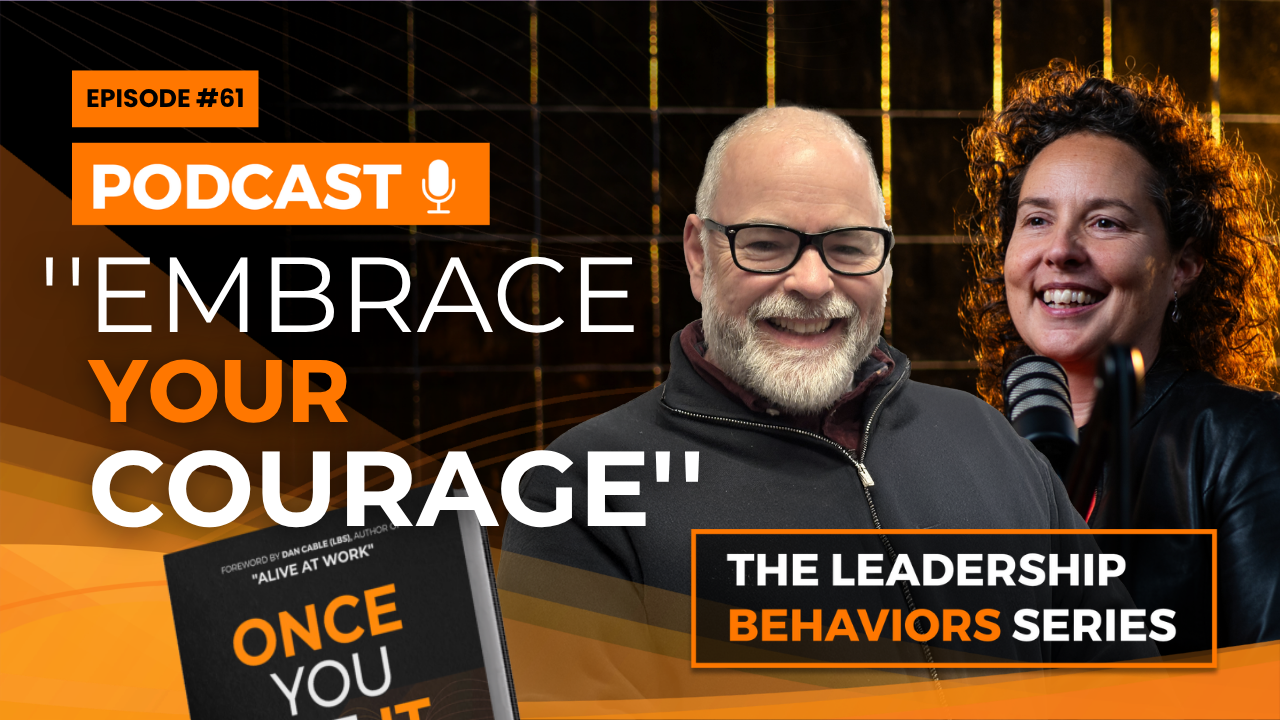
This is based on the podcast transcript. Check out the podcast or the video podcast!
This podcast is part of a series on behaviors for human-centric transformation, ‘Layer 3’ in Zanna’s new book: Once You See It.
If you want to dive deeper into creating organizational change that actually sticks, you can order the book here.